
AI and Quantum Computers
November 5, 2026
It’s not every day I get to see London from the perspective of a 30th-floor boardroom of a City law firm! But that was the breath-taking venue for a talk I gave on “AI and quantum computers” at “Latham & Watkins”. Thanks to Amy Smyth for inviting me to talk to her colleagues in London and, via video link, in the European and Asian offices.

Latham & Watkins’ 30th floor boardroom in the City of London

Latham & Watkins at One Leadenhall, City of London

Fab view from the 30th floor of Latham & Watkins


What I do is take complex subjects and make them (hopefully) accessible to anyone. It was why Latham & Watkins invited me to talk to them about “AI and quantum computers”
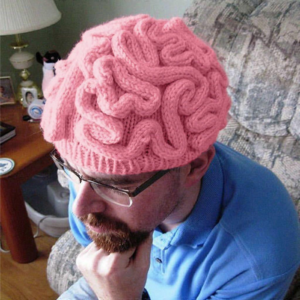
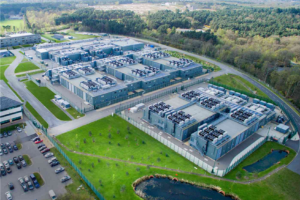
The human brain runs on ~20 watts – a fifth of the power of a light bulb – whereas AI requires thousands of data centre using megawatts or gigawatts
If you need an exponential increase in computing power for an incremental increase in computing capacity, it is an unmistakable sign of a technology that has hit the buffers and is very likely a dead-end

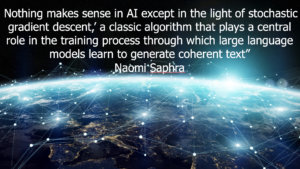
The crucial algorithm that, during the training of an AI, tweaks the “weights” etc in the network to boost the probability of the correct data output for a given data input

AI firms are burning through money. Though hardware firms like Nvidia are making money, none of the firms creating AI models have made a profit. Anthropic alone lost $80 billion in the first half of 2026

AI hallucinations – a major AI problem – occur because AIs, lacking real-world knowledge, see patterns where patterns do not exist

AIs are a mirror of what exists out on the Internet. Actually, they are a distorted mirror – distorted, for instance, by the biases of the people – mostly white men under 40 – who have created what is out there.
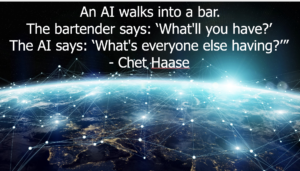

AI is a black box, which we may never be able to see in to because it might not be possible to break down AI reasoning into step-by-step logic like human reasoning. AI may be first example of an “alien” intelligence.
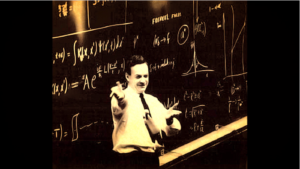
At Caltech, I took a course from Richard Feynman called “Potentialities and limitations of computers”. The course had come out of lunches Feynman had with Carver Mead (VLSI) and John Hopfied (Hopfield networks). I didn’t realise until recently that I had been inadvertently on the spot for the birth of both quantum computers and modern AI!
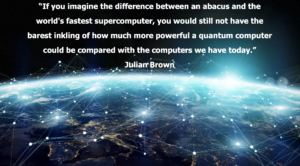
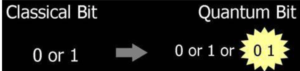
Since a qubit can represent a 0 and 1 at the same time, calculating with a qubit gives you 2 calculations for the price of one. Calculating with 2 qubits gives you 4 calculations for the price of one. Sooner or later such “exponential” increase beats into submission any normal computer
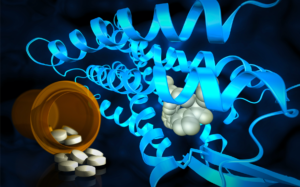
Even if a general-purpose quantum computer is impossible, quantum computers will still change the world by circumventing costly and time-consuming tests of drugs, battery compounds, and so on
Quantum computers can help AI because AI needs exponentially increasing computing power, and exponentially increasing computer power is literally the USP of quantum computers. AI can help quantum computers by vastly improving error-correction, the Achilles’ Heel of quantum computers
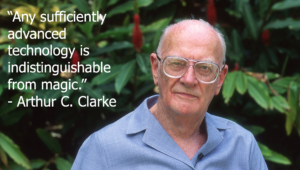
And “indistinguishable from magic” is a good description of what we can expect from the merger of AI and quantum computers